Custom Search

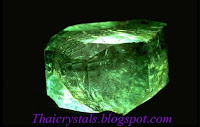
Corundum Crystal

Corundum Crystal
Nice jewelry from Thailand make by Corundum...

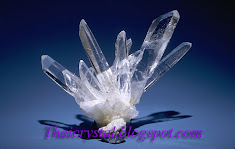
Clear Quart

Clear Quart
It's known as the "master healer" and will amplify energy and....

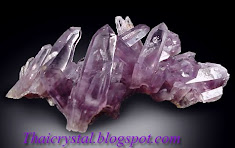
Amethyst Quart

Amethyst Quart
Amethyst is a powerful and protective stone. It.....

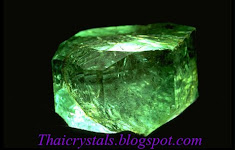
Buryl Emerald

Buryl Emerald
Emeralds in antiquity were mined by the Egyptians and.....
Showing posts with label Garnets. Show all posts

Geological importance of garnet


Geological of Garnet
Geological importance of garnet

The Garnet group is a key mineral in interpreting the genesis of many igneous and metamorphic rocks via geothermobarometry. Diffusion of elements is relatively slow in garnet compared to rates in many other minerals, and garnets are also relatively resistant to alteration. Hence, individual garnets commonly preserve compositional zonations that are used to interpret the temperature-time histories of the rocks in which they grew. Garnet grains that lack compositional zonation commonly are interpreted as having been homogenized by diffusion, and the inferred homogenization also has implications for the temperature-time history of the host rock.
Garnets are also useful in defining metamorphic facies of rocks. For instance, eclogite can be defined as a rock of basalt composition, but mainly consisting of garnet and omphacite. Pyrope-rich garnet is restricted to relatively high-pressure metamorphic rocks, such as those in the lower crust and in the Earth's mantle. Peridotite may contain plagioclase, or aluminium-rich spinel, or pyrope-rich garnet, and the presence of each of the three minerals defines a pressure-temperature range in which the mineral could equilibrate with olivine plus pyroxene: the three are listed in order of increasing pressure for stability of the peridotite mineral assemblage. Hence, garnet peridotite must have been formed at great depth in the earth. Xenoliths of garnet peridotite have been carried up from depths of 100 km and greater by kimberlite, and garnets from such disaggegated xenoliths are used as a kimberlite indicator minerals in diamond prospecting. At depths of about 300 to 400 km and greater, a pyroxene component is dissolved in garnet, by the substitution of (Mg,Fe) plus Si for 2Al in the octahedral (Y) site in the garnet structure, creating unusually silica-rich garnets that have solid solution towards majorite. Such silica-rich garnets have been identified as inclusions within diamonds.
The largest documented garnet single crystal was an isometric block measuring ~2.3 m and weighing ~37.5 tons. The news on larger garnet crystals found near Alice Springs, Northern Territory, Australia have not been confirmed.

Uses Of Garnet


Garnet Use
Uses of garnets
Red garnets were the most commonly used gemstones in the Late Antique Roman world, and the Migration Period art of the "barbarian" peoples who took over the territory of the Western Empire. They were especially used inlaid in gold cells in the cloisonné technique, a style often just called garnet cloisonné, found from Anglo-Saxon England, as at Sutton Hoo, to the Black Sea.
Pure crystals of garnet are still used as gemstones. The gemstone varieties occur in shades of green, red, yellow and orange. In the USA it is known as the birthstone for January. It is the state mineral of Connecticut. It is also New York's gemstone, and star garnet is the state gemstone of Idaho.

Garnets Indurstrial
Industrial uses
Garnet sand is a good abrasive, and a common replacement for silica sand in sand blasting. Alluvial garnet grains which are rounder are more suitable for such blasting treatments. Mixed with very high pressure water, garnet is used to cut steel and other materials in water jets. For water jet cutting, garnet extracted from hard rock is suitable since it is more angular in form, therefore more efficient in cutting.
Garnet paper is favoured by cabinetmakers for finishing bare wood.
Garnet sand is also used for water filtration media.
As an abrasive garnet can be broadly divided in two categories, blasting grade and water jet grade. The garnet, as it is mined and collected, is crushed to finer grains; all pieces which are larger than 60 mesh (250 micrometres) are normally used for sand blasting. The pieces between 60 mesh (250 micrometres) and 200 mesh (74 micrometres) are normally used for water jet cutting. The remaining garnet pieces that are finer than 200 mesh (74 micrometres) are used for glass polishing and lapping. Regardless of the application, the larger grain sizes are used for faster work and the smaller ones are used for finer finishes.
There are different kinds of abrasive garnets which can be divided based on their origin. The largest source of abrasive garnet today is garnet rich beach sand which is quite abundant on Indian and Australian coasts and the main producers today are seen to be Australia and India.
This material is particularly popular due to its consistent supplies, huge quantities and clean material. The common problems with this material are the presence of ilmenite and chloride compounds. Since the material is being naturally crushed and ground on the beaches for past centuries, the material is normally available in fine sizes only. Most of the garnet at the Tuticorin beach is 80 mesh, and ranges from 56 mesh to 100 mesh size.
River garnet is particularly abundant in Australia. The river sand garnet occurs as a placer deposit.
Rock garnet is perhaps the garnet type used for the longest period of time. This type of garnet is produced in America, China and western India. These crystals are crushed in mills and then purified by wind blowing, magnetic separation, sieving and, if required, washing. Being freshly crushed, this garnet has the sharpest edges and therefore performs far better than other kinds of garnet. Both the river and the beach garnet suffer from the tumbling effect of hundreds of thousands of years which rounds off the edges.
Garnet has been mined in western Rajasthan for the past 200 years, but mainly for the gemstone grade stones. Abrasive garnet was mainly mined as a secondary product while mining for gem garnets and was used as lapping and polishing media for the glass industries. The host rock of the garnet here is garnetiferous mica schist and the total percentage of garnet is not more than 7% to 10%, which makes the material extremely costly and non economical to extract for non-gemstone applications.

Synthetic garnets


Synthetic Garnet
Synthetic garnets
The crystallographic structure of garnets has been expanded from the prototype to include chemicals with the general formula A3B2(C O4)3. Besides silicon, a large number of elements have been put on the C site, including Ge, Ga, Al, V and Fe.
Yttrium aluminium garnet (YAG), Y3Al2(AlO4)3, is used for synthetic gemstones. Due to its fairly high refractive index, YAG was used as a diamond simulant in the 1970s until the methods of producing the more advanced simulant cubic zirconia in commercial quantities were developed. It can be grown in a variety of colors: Colorless, green, pink, blue, yellow, lavender, etc. When doped with neodymium (Nd3+) these YAl-garnets are useful as the lasing medium in lasers. Some YAG lasers use others colored cations (Cr, Ho ...).
Interesting magnetic properties arise when the appropriate elements are used. In yttrium iron garnet (YIG), Y3Fe2(FeO4)3, the five iron(III) ions occupy two octahedral and three tetrahedral sites, with the yttrium(III) ions coordinated by eight oxygen ions in an irregular cube. The iron ions in the two coordination sites exhibit different spins, resulting in magnetic behaviour. YIG is a ferrimagnetic material having a Curie temperature of 550 K.
Another example is gadolinium gallium garnet, Gd3Ga2(GaO4)3 which is synthesized for use in magnetic bubble memory.

Color Change Garnets


Color Change Garnets
Color Change Garnets.
Garnet members of the pyrope-spessartine solid-solution series from Bekily in Madagascar display several colors depending on the light source. The alexandrite-like color change from blue-green in daylight to purple in incandescent light is mainly caused by relatively high amounts of vanadium. Although they look a lot like alexandrites they are different because they change color throughout the day. They are green or blue grey in the early morning and reddish in the late afternoon or in strong sunlight. Bekily garnets will appear red in the afternoon while the alexandrites remain green. Garnets from other parts of East Africa also change color but as they normally change from brown or orange to red, they don't look much like alexandrite.
Some of the stones are almost blue especially under fluorescent light but most of them are grey blue or green in daylight and change to red under incandescent or late afternoon light. The stones can show an excellent color change and can easily be confused with alexandrite.

Garnets Properties


Garnets Property
Garnets Properties
Garnets species are found in many colors including red, orange, yellow, green, blue, purple, brown, black, pink and colorless. The rarest of these is the blue garnet, discovered in the late 1990s in Bekily, Madagascar. It is also found in parts of the United States, Russia and Turkey. It changes color from blue-green in the daylight to purple in incandescent light, as a result of the relatively high amounts of vanadium (about 1 wt.% V2O3). Other varieties of color-changing garnets exist. In daylight, their color ranges from shades of green, beige, brown, gray, and blue, but in incandescent light, they appear a reddish or purplish/pink color. Because of their color changing quality, this kind of garnet is often mistaken for Alexandrite.
Garnet species’s light transmission properties can range from the gemstone-quality transparent specimens to the opaque varieties used for industrial purposes as abrasives. The mineral’s luster is categorized as vitreous (glass-like) or resinous (amber-like).

Garnets Crystal structure
Garnets are nesosilicates having the general formula X3Y2(SiO4)3. The X site is usually occupied by divalent cations (Ca2+, Mg2+, Fe2+) and the Y site by trivalent cations (Al3+, Fe3+, Cr3+) in an octahedral/tetrahedral framework with [SiO4]4− occupying the tetrahedra. Garnets are most often found in the dodecahedral crystal habit, but are also commonly found in the trapezohedron habit. (Note: the word "trapezohedron" as used here and in most mineral texts refers to the shape called a Deltoidal icositetrahedron in solid geometry.) They crystallize in the cubic system, having three axes that are all of equal length and perpendicular to each other. Garnets do not show cleavage, so when they fracture under stress, sharp irregular pieces are formed.

Garnet Hardness
Because the chemical composition of garnet varies, the atomic bonds in some species are stronger than in others. As a result, this mineral group shows a range of hardness on the Mohs Scale of about 6.5 to 7.5. The harder species, like almandine, are often used for abrasive purposes.

The Garnets


Garnets
The Garnets
The garnet group includes a group of minerals that have been used since the Bronze Age as gemstones and abrasives. The name "garnet" may come from either the Middle English word gernet meaning 'dark red', or the Latin granatus ("grain"), possibly a reference to the Punica granatum ("pomegranate"), a plant with red seeds similar in shape, size, and color to some garnet crystals.

Six common species of garnet are recognized by their chemical composition. They are pyrope, almandine, spessartine, grossular (varieties of which are hessonite or cinnamon-stone and tsavorite), uvarovite and andradite. The garnets make up two solid solution series: 1. pyrope-almandine-spessarite and 2. uvarovite-grossular-andradite.