Custom Search

Corundum Crystal

Corundum Crystal
Nice jewelry from Thailand make by Corundum...

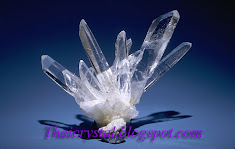
Clear Quart

Clear Quart
It's known as the "master healer" and will amplify energy and....

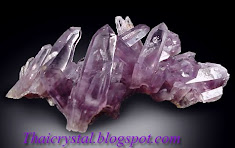
Amethyst Quart

Amethyst Quart
Amethyst is a powerful and protective stone. It.....

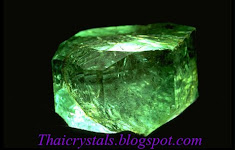
Buryl Emerald

Buryl Emerald
Emeralds in antiquity were mined by the Egyptians and.....
Showing posts with label Zircon. Show all posts

Occurrence Of Zircon


Occurrence Of Zircon

Zircon is a common accessory to trace mineral constituent of most granite and felsic igneous rocks. Due to its hardness, durability and chemical inertness, zircon persists in sedimentary deposits and is a common constituent of most sands. Zircon is rare within mafic rocks and very rare within ultramafic rocks aside from a group of ultrapotassic intrusive rocks such as kimberlites, carbonatites, and lamprophyre, where zircon can occasionally be found as a trace mineral owing to the unusual magma genesis of these rocks.
Zircon forms economic concentrations within heavy mineral sands ore deposits, within certain pegmatites, and within some rare alkaline volcanic rocks, for example the Toongi Trachyte, Dubbo, New South Wales Australia in association with the zirconium-hafnium minerals eudialyte and armstrongite.

Zircon Use


Zircon Use
  • Zircons are commercially mined for the metal zirconium, and are used for abrasive and insulating purposes.
  • It is the source of zirconium oxide (ZrO2), one of the most refractory materials known.
  • Large specimens are appreciated as gemstones, owing to their high refractive index. (Zircon has a refractive index of approximately 1.95; diamond's is approximately 2.4.)
  • Zircon is one of the key minerals used by geologists for geochronology .
  • Zircon is a part of the ZTR index to classify highly-weathered sediments.

Zircon Property


Zircon Property
Zircon Property
Zircon is a remarkable mineral, if only for its almost ubiquitous presence in the crust of Earth. It occurs in igneous rocks (as primary crystallization products), in metamorphic rocks and in sedimentary rocks (as detrital grains). Large zircon crystals are seldom abundant. Their average size, e.g. in granite rocks, is about 0.1–0.3 mm, but they can also grow to sizes of several centimeters (a few inches), especially in pegmatites.
Owing to their uranium and thorium content, some zircons may undergo metamictization. The processes, related to internal radiation damage, partially disrupt the crystal structure and partly explain the highly-variable properties of zircon. As zircon becomes more and more modified by internal radiation damage, the density decreases, the crystal structure is compromised, and the color changes.
Zircon is a common accessory mineral that occurs worldwide. Noted occurrences include: Australia; Russia (Ural Mountains); Trentino, Monte Somma, and Vesuvius, Italy; Arendal, Norway; Sri Lanka; India; Indonesia, Java, Kalimantan, Sulawesi; Thailand; Ratanakiri, Cambodia; the Kimberley mines, Republic of South Africa; Madagascar; Renfrew County, Ontario, and Grenville, Quebec, Canada; and Litchfield, Maine; Chesterfield, Massachusetts; Essex, Orange, and St. Lawrence counties, New York; Henderson County, North Carolina; the Pikes Peak district of Colorado; and Llano County, Texas in the United States. Australia leads the world in zircon mining, producing 37% of the world total and accounting for 40% of world EDR (economic demonstrated resources) for the mineral. Thorite (ThSiO4) is an isostructural related mineral.
Zircon occurs in many different colors, including red, pink, brown, yellow, hazel, black, or colorless. The color of zircons sometimes can be changed by heat treatment. Depending on the amount of heat applied, colorless, blue, and golden-yellow zircons can be made. In geological settings, the development of pink, red, and purple zircon occurs after hundreds of millions of years provided the crystal has sufficient trace elements to produce color centers. Color in this red or pink series is annealed in geological conditions above the temperature about 350 °C.

Zircon


Zircon
Zircon (including hyacinth or yellow zircon) is a mineral belonging to the group of nesosilicates. Its chemical name is zirconium silicate and its corresponding chemical formula is ZrSiO4. A common empirical formula showing some of the range of substitution in zircon is (Zr1-y,REEy)(SiO4)1-x(OH)4x-y. Zircon forms in silicate melts with concentrated incompatible elements and accepts high field strength elements into its structure. For example, hafnium is almost always present in quantities ranging from 1 to 4%. The crystal structure of zircon is tetragonal crystal system. The natural color of zircon varies between colorless, yellow-golden, red, brown, blue, and green. Colorless specimens that show gem quality are a popular substitute for diamond; these specimens are also known as "Matura diamond".
The name either derives from the Syriac word zargono, from the Arabic word zarqun, meaning vermilion, or from the Persian zargun , meaning golden-colored. These words are corrupted into "jargoon", a term applied to light-colored zircons. The English word "Zircon" is derived from "Zirkon," which is the German adaption of these words. Yellow zircon is called "hyacinth", from the flower hyacinthus, whose name is of Ancient Greek origin; in the Middle Ages all yellow stones of East Indian origin were called hyacinth, but today this term is restricted to the yellow zircons.