Custom Search

Corundum Crystal

Corundum Crystal
Nice jewelry from Thailand make by Corundum...

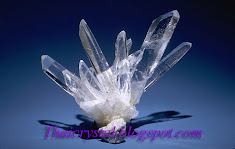
Clear Quart

Clear Quart
It's known as the "master healer" and will amplify energy and....

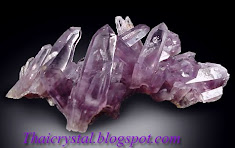
Amethyst Quart

Amethyst Quart
Amethyst is a powerful and protective stone. It.....

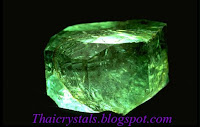
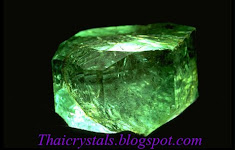
Buryl Emerald

Buryl Emerald
Emeralds in antiquity were mined by the Egyptians and.....
Showing posts with label Sapphires. Show all posts

Sapphires Treatments


Sapphires Treatments

Sapphires may be treated by several methods to enhance and improve their clarity and color. It is common practice to heat natural sapphires to improve or enhance color. This is done by heating the sapphires in air to temperatures between 500 and 1800 °C for several hours, or by heating in a nitrogen-deficient atmosphere oven for seven days or more. Upon heating, the stone becomes a more blue in color but loses some of the rutile inclusions (silk). When high heat temperatures are used, the stone loses all of the silk and becomes clear under magnification. Evidence of sapphire and other gemstones being subjected to heating goes back to, at least, Roman times. Un-heated stones are quite rare and will often be sold accompanied by a certificate from an independent gemological laboratory attesting to "no evidence of heat treatment".
Diffusion treatments are somewhat more controversial as they are used to add elements to the sapphire for the purpose of improving colors. Typically beryllium is diffused into a sapphire with very high heat, just below the melting point of the sapphire. Initially (c. 2000) orange sapphires were created with this process, although now the process has been advanced and many colors of sapphire are often treated with beryllium. It is unethical to sell beryllium-treated sapphires without disclosure, and the price should be much lower than a natural gem or one that has been enhanced by heat alone.
Treating stones with surface diffusion is generally frowned upon; as stones chip or are repolished/refaceted the 'padparadscha' colored layer can be removed. (There are some diffusion treated stones in which the color goes much deeper than the surface, however.) The problem lies in the fact that treated padparadschas are at times very difficult to detect, and they are the reason that getting a certificate from a reputable gemological lab (e.g., Gubelin, SSEF, AGTA, etc.) is recommended before investing in them.
According to Federal Trade Commission guidelines, in the United States, disclosure is required of any mode of enhancement that has a significant effect on the gem's value.

Color change sapphire


blue sapphires
Color change sapphire

A rare variety of sapphire, known as color change sapphire, exhibits different colors in different light. Color change sapphires are blue in outdoor light and purple under incandescent indoor light; they may also be pink in daylight to greenish under fluorescent light. Some stones shift color well and others only partially, in that some stones go from blue to bluish purple. While color change sapphires come from a variety of locations, the gem gravels of Tanzania is the main source.
Certain synthetic color-change sapphires are sold as “lab” or “synthetic” alexandrite, which is accurately called an alexandrite simulant (also called alexandrium) since the latter is actually a type of chrysoberyl—an entirely different substance whose pleochroism is different and much more pronounced than color-change corundum (sapphire).

Sapphires structure
Source of color
Red rubies are corundum which contain chromium impurities that absorb yellow-green light and result in deeper ruby red color with increasing content. Purple sapphires contain trace amounts of vanadium and come in a variety of shades. Corundum that contains ~0.01% of titanium is colorless. If trace amounts of iron are present, a very pale yellow to green color may be seen. If both titanium and iron impurities are present together, however, the result is a magnificent deep-blue color .
Unlike localized ("interatomic") absorption of light which causes color for chromium and vanadium impurities, blue color in sapphires comes from intervalence charge transfer, which is the transfer of an electron from one transition-metal ion to another via the conduction or valence band. The iron can take the form Fe2+ or Fe3+, while titanium generally takes the form Ti4+. If Fe2+ and Ti4+ ions are substituted for Al3+, localized areas of charge imbalance are created. An electron transfer from Fe2+ and Ti4+ can cause a change in the valence state of both. Because of the valence change there is a specific change in energy for the electron, and electromagnetic energy is absorbed. The wavelength of the energy absorbed corresponds to yellow light. When this light is subtracted from incident white light, the complementary color blue results. Sometimes when atomic spacing is different in different directions there is resulting blue-green dichroism.
Intervalence charge transfer is a process that produces a strong colored appearance at a low percentage of impurity. While at least 1% chromium must be present in corundum before the deep red ruby color is seen, sapphire blue is apparent with the presence of only 0.01% of titanium and iron.

Padparadscha And star sapphire


Padparadscha
Padparadscha

Padparadscha is a pink-orange corundum, with a low to medium saturation and light tone, originally being mined in Sri Lanka, but also found in deposits in Vietnam and Africa; Padparadscha sapphires are very rare and highly valued. The name derives from the Sinhalese word for lotus blossom. Along with rubies, they are the only type of corundum to be given their own name instead of being called a particular colored sapphire. The rarest of all padparadschas is the totally natural variety, with no sign of treatment.

Star Sapphire
A star sapphire
A star sapphire is a type of sapphire that exhibits a star-like phenomenon known as asterism. Star sapphires contain intersecting needle-like inclusions (often the mineral rutile, a mineral composed primarily of titanium dioxide[8]) that cause the appearance of a six-rayed 'star'-shaped pattern when viewed with a single overhead light source.
The Black Star of Queensland is believed to be the largest star sapphire, weighing in at 733 carats.[9] The Star of India (563.35 carats) is thought to be the second largest star sapphire and is currently on display at the American Museum of Natural History in New York City. The 182 carat Star of Bombay, housed in the National Museum of Natural History, Washington D.C., is an example of a blue star sapphire. The value of a star sapphire, however, depends not only on the weight of the stone but also the body color, visibility and intensity of the asterism

Fancy color sapphire


Fancy color sapphire

Pink sapphire Yellow and green sapphires are also commonly found. Pink sapphires deepen in color as the quantity of chromium increases. The deeper the pink color the higher their monetary value as long as the color is going towards the red of rubies.
Sapphires also occur in shades of orange and brown, and colorless sapphires are sometimes used as diamond substitutes in jewelry. Padparadscha sapphires often fetch higher prices than many of even the finest blue sapphires. Recently, sapphires of this color have appeared on the market as a result of a new treatment method called "lattice diffusion".

Blue Sapphire


blue sapphire
Blue sapphire
Color in gemstones breaks down into three components: hue, saturation, and tone. Hue is most commonly understood as the "color" of the gemstone. Saturation refers to the vividness or brightness or "colorfulness" of the hue, and tone is the lightness to darkness of the hue. Blue sapphire exists in various mixtures of its primary (blue) and secondary hues, various tonal levels (shades) and at various levels of saturation (brightness).
Blue sapphires are evaluated based upon the purity of their primary hue. Purple, violet and green are the normal secondary hues found in blue sapphires. Violet and purple can contribute to the overall beauty of the color, while green is considered a distinct negative. Blue sapphires with no more than 15% violet or purple are generally said to be of fine quality. Blue sapphires with any amount of green as a secondary hue are not considered to be fine quality. Gray is the normal saturation modifier or mask found in blue sapphires. Gray reduces the saturation or brightness of the hue and therefore has a distinctly negative effect.
The color of fine blue sapphires can be described as a vivid medium dark violet to purplish blue where the primary blue hue is at least 85% and the secondary hue no more than 15% without the least admixture of a green secondary hue or a gray mask.
The 423 carats (85 g) Logan sapphire in the National Museum of Natural History, Washington D.C. is one of the largest faceted gem-quality blue sapphires in the world.

Sapphires Mining


Sapphires Mining
Sapphires Mining.
Sapphires are mined from alluvial deposits or from primary underground workings. The mining locations include Myanmar, Madagascar, Sri Lanka, Australia, Thailand, India, Pakistan, Afghanistan, Tanzania, Kenya and China. The Logan sapphire, the Star of India and the Star of Bombay originate from Sri Lankan mines. Madagascar is the world leader in sapphire production (as of 2007) specifically its deposits in and around the city of Ilakaka. In 1991 a new sapphire occurrence, similar in quality to that of Kashmir is discovered in southern Madagascar. This is Andranondambo. The occurrences of the Andranondambo area were industrially exploited since 1993 and have been almost abandoned few years later. This, because of difficulties to exploit sapphires in their bedrock. This sapphire has been sold as Kashmir on the international market. Prior to Ilakaka, Australia was the largest producer of sapphires (as of 1987). In 1991, a new sapphire occurrence was discovered in Andranondambo, southern Madagascar. That area was industrially exploited since 1993 and has been almost abandoned few years later because of difficulties of exploiting sapphires in their bedrock. In the United States sapphires have been produced from deposits near Helena, Montana. Gem grade sapphires and rubies are also found in and around Franklin, North Carolina.